Carpet Tiles are rapidly becoming the flooring solution of choice for modern office environments. Businesses today prioritize durability, flexibility, sustainability, and cost efficiency when designing workspaces. According to the International Facility Management Association (IFMA), flooring accounts for nearly 15% of a commercial interior renovation budget. As organizations seek practical ways to maximize this investment, carpet tiles continue to gain popularity across corporate offices, coworking spaces, educational facilities, and government buildings.
Modern workplaces demand flooring that supports employee comfort while maintaining a professional appearance. Carpet tiles meet these requirements through modular installation, acoustic benefits, and simplified maintenance. Unlike traditional broadloom carpet, damaged sections can be replaced individually without removing the entire floor.
Industry experts also highlight the sustainability advantages of modular flooring systems. Many leading manufacturers now produce carpet tiles using recycled materials and low-emission production processes. As businesses increasingly focus on environmental responsibility and long-term operational savings, carpet tiles provide a solution that aligns with both financial and sustainability goals. Their combination of performance, design versatility, and maintenance efficiency explains why they continue to dominate modern office flooring projects.
Modern offices evolve frequently due to team growth, departmental restructuring, and hybrid work arrangements. Carpet Tiles offer unmatched flexibility because individual tiles can be removed, replaced, or reconfigured without disrupting the entire floor.
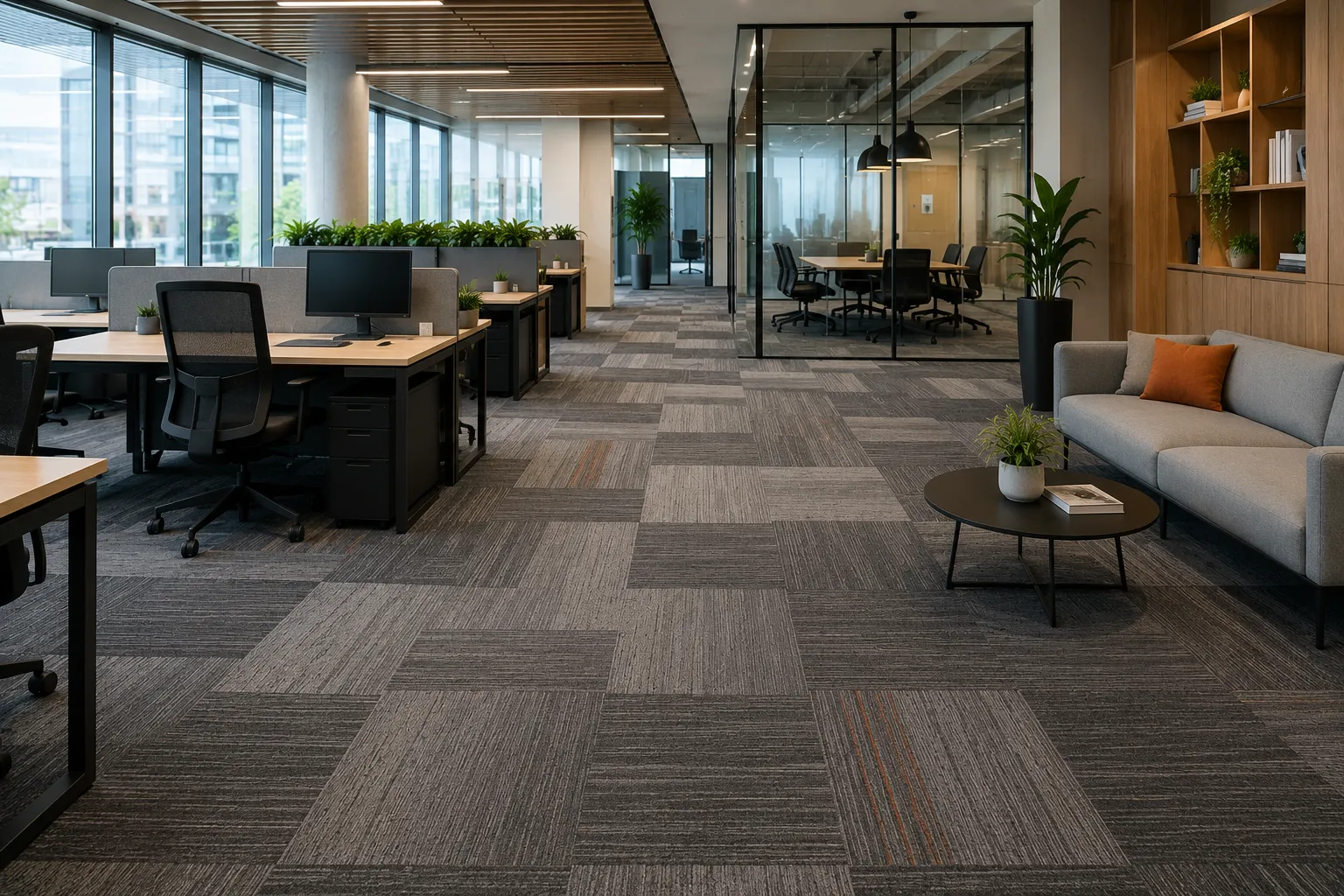
A standard carpet tile measures 50 cm by 50 cm, making installation straightforward and highly adaptable. Facility managers can replace a stained or damaged tile within minutes. Traditional carpet often requires replacing an entire section, increasing labor costs and downtime.
Businesses also benefit from creative design possibilities. Different colors, textures, and patterns can define collaborative zones, meeting areas, and walkways. This flexibility helps organizations create visually appealing environments while maintaining a cohesive office design.
Key advantages include:
Easy tile replacement.
Reduced flooring waste.
Faster installation times.
Flexible office zoning.
Lower long-term maintenance costs.
Open-plan offices remain popular, yet excessive noise can negatively affect employee concentration. Research from the Center for the Built Environment found that noise distractions remain one of the most common workplace complaints.
Carpet Tiles significantly reduce impact sound and foot traffic noise. Their backing systems absorb sound waves, helping create quieter workspaces. Many commercial-grade carpet tiles achieve sound absorption ratings between 0.15 and 0.40 NRC (Noise Reduction Coefficient).
Improved acoustics contribute directly to workplace performance. Employees experience fewer distractions during phone calls, meetings, and focused tasks. This creates a more comfortable environment that supports productivity and collaboration.
Experts in workplace design often recommend carpet tiles for large offices because they balance functionality with employee wellbeing. Combined with acoustic ceiling panels and furniture solutions, modular flooring helps create a more controlled sound environment.
| Feature | Benefit |
|---|---|
| Sound absorption | Reduces workplace noise |
| Impact noise reduction | Minimizes footstep sounds |
| Improved concentration | Supports employee productivity |
| Better meeting privacy | Limits sound transfer |
| Enhanced comfort | Creates a quieter atmosphere |
Environmental responsibility increasingly influences office renovation decisions. Carpet Tiles support sustainability goals through efficient material usage and reduced waste generation. Many manufacturers now incorporate recycled nylon fibers and reclaimed backing materials into production.
The U.S. Green Building Council recognizes flooring products that contribute to LEED certification requirements. Carpet tile systems often qualify for credits related to recycled content and indoor environmental quality.
From a financial perspective, modular flooring offers measurable savings. Replacing a single damaged tile costs significantly less than replacing an entire carpet section. Maintenance teams can perform repairs quickly, reducing labor expenses and minimizing workplace disruptions.
Facility management professionals consistently report lower lifecycle costs with carpet tile installations. Businesses benefit from extended flooring lifespan while maintaining a professional appearance throughout daily operations. This combination of sustainability and cost efficiency makes carpet tiles an attractive investment for organizations of every size.
Office design now plays a critical role in employee experience and brand identity. Carpet Tiles provide extensive customization options that help businesses create distinctive workspaces. Manufacturers offer thousands of color combinations, textures, and patterns designed specifically for commercial environments.
Designers frequently use carpet tiles to create visual pathways, collaborative zones, and departmental boundaries without constructing physical barriers. This approach supports flexible workplace layouts while enhancing navigation throughout the office.
Current trends include biophilic-inspired patterns, neutral color palettes, and geometric designs. These styles contribute to contemporary office aesthetics while maintaining long-term design relevance. Explore our solutions for Office design.
Commercial interior specialists emphasize that flooring often serves as the foundation of workplace design. Carpet tiles allow organizations to align flooring choices with branding objectives, employee preferences, and functional requirements. Their versatility helps create environments that are both visually appealing and highly practical.
Carpet Tiles continue to reshape modern office flooring by combining flexibility, acoustic performance, sustainability, and design versatility. Businesses benefit from easier maintenance, reduced lifecycle costs, and improved workplace comfort. Their modular construction allows quick repairs while minimizing operational disruption. At the same time, advanced manufacturing processes support environmental goals through recycled materials and reduced waste. As offices continue evolving to meet changing workforce needs, carpet tiles provide a practical solution that balances aesthetics with performance. Their proven ability to enhance productivity, control costs, and support modern workplace design explains why they remain the preferred flooring choice for contemporary office environments.
We are committed to delivering high-quality painting and flooring services that enhance the beauty, comfort, and value of your space. With a focus on craftsmanship, reliability, and customer satisfaction, we handle every project with care from start to finish.