Commercial flooring has to handle challenges that are less common in residential settings. Regular foot traffic, rolling equipment, frequent cleaning, spills, furniture movement, and changing interior layouts can all influence how a floor performs over time. Vinyl flooring is often considered for these environments because it combines practical performance with a wide range of design options.
From offices and retail stores to clinics, schools, hospitality spaces, and other public buildings, commercial vinyl flooring can adapt to different functional requirements. Understanding its strengths, available formats, and limitations makes it easier to decide where it fits within a commercial interior.
Vinyl is a resilient flooring material designed to provide a slightly flexible surface compared with harder materials such as stone or ceramic tile. Commercial products are available in different constructions, including sheet vinyl, vinyl tiles, and luxury vinyl tile or plank formats.
One reason vinyl flooring works well in commercial spaces is its balance of everyday practicality. It can provide a smooth, easy-to-maintain surface while offering visual choices that suit both simple and highly designed interiors.
The right product still depends on the building and how the area is used. A quiet office corridor, for example, places different demands on flooring than a busy reception area or healthcare treatment room.
Commercial floors regularly experience shoes, carts, chairs, equipment, deliveries, and other sources of wear. Flooring selection therefore needs to consider more than appearance.
Commercial vinyl products are generally constructed with surface layers intended to resist everyday wear. The appropriate wear layer, installation method, and product type should be selected according to expected traffic and use.
This makes vinyl suitable for many reception areas, corridors, shops, classrooms, offices, and similar environments. Proper maintenance also matters. Dirt and grit left on the surface can gradually affect almost any flooring material, so routine cleaning remains important even with durable commercial flooring.
Cleaning requirements can have a major effect on operating costs and daily building management. Vinyl flooring usually has a relatively smooth, non-porous surface that can simplify routine care.
Dust and loose debris can be removed through regular sweeping, vacuuming, or other appropriate methods, while suitable cleaning products can address marks and spills. Because cleaning requirements vary by product, facility teams should follow the flooring manufacturer’s maintenance instructions rather than assuming that every vinyl surface can be treated in the same way.
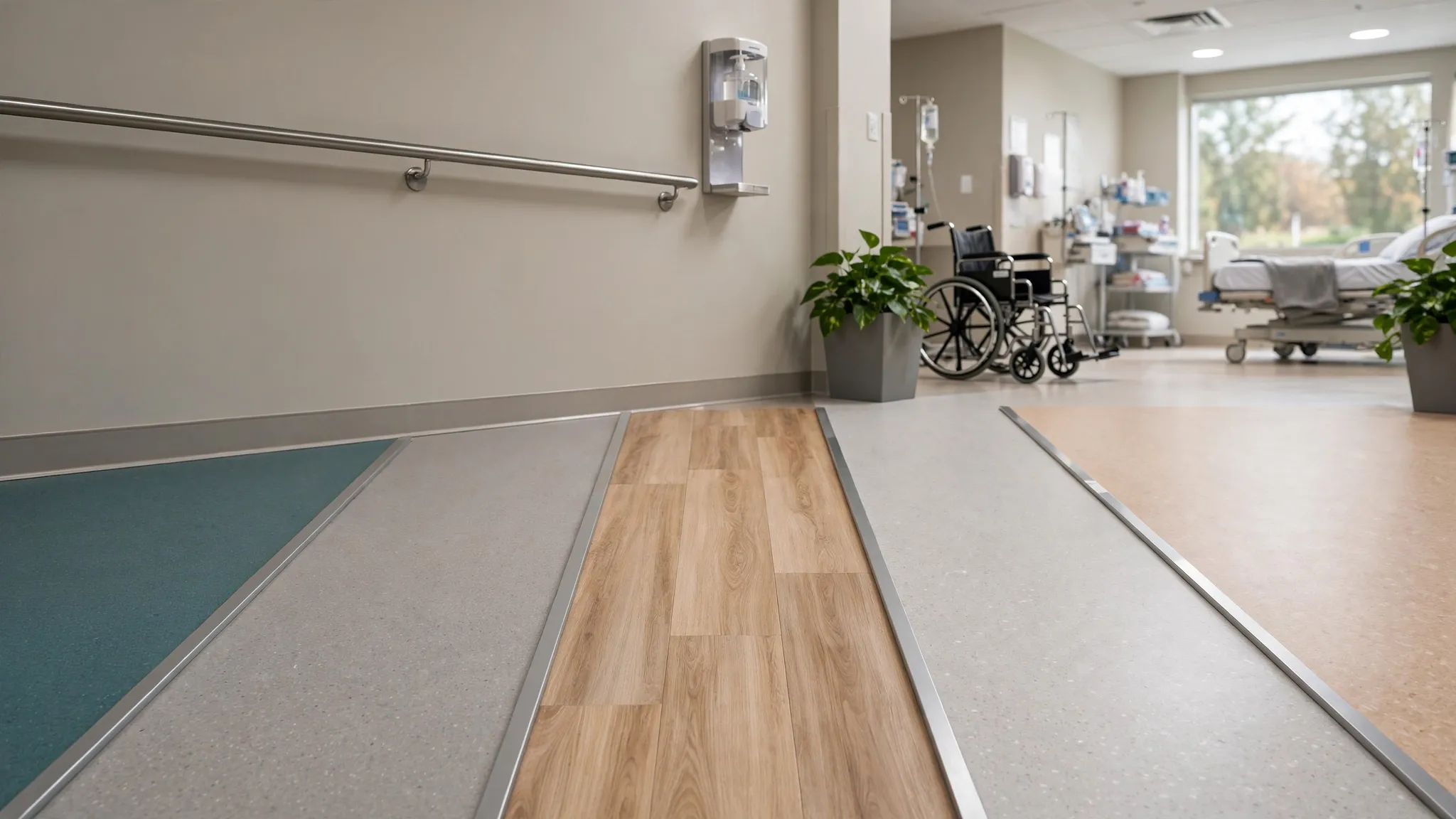
This characteristic can be especially relevant when considering Best Flooring Options for Healthcare Facilities, where cleaning procedures, moisture exposure, room function, and hygiene requirements can influence flooring decisions.
Commercial interiors do not all need the same visual character. A professional office may call for a subtle finish, while a retail store may use flooring to help define departments or customer pathways.
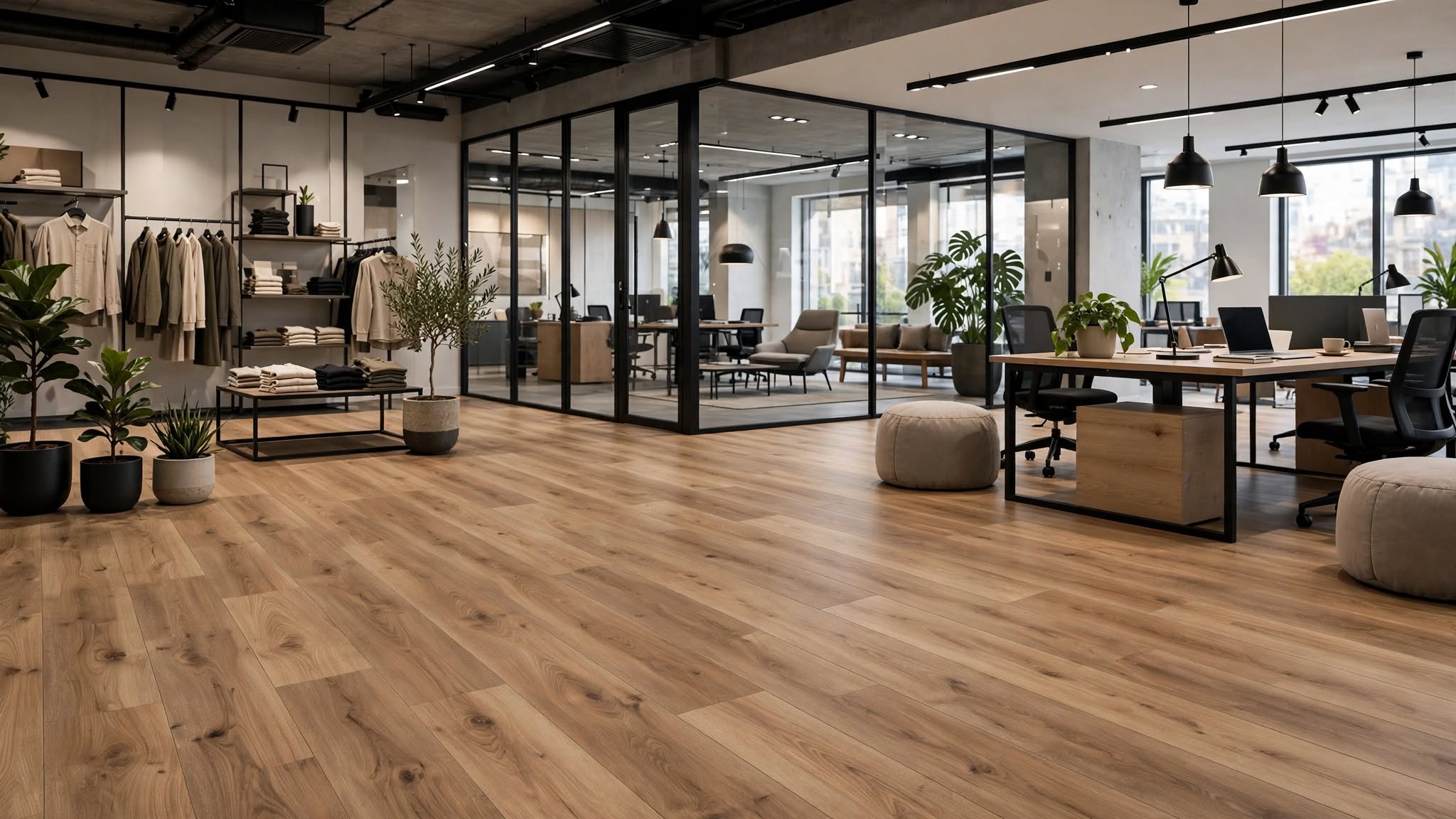
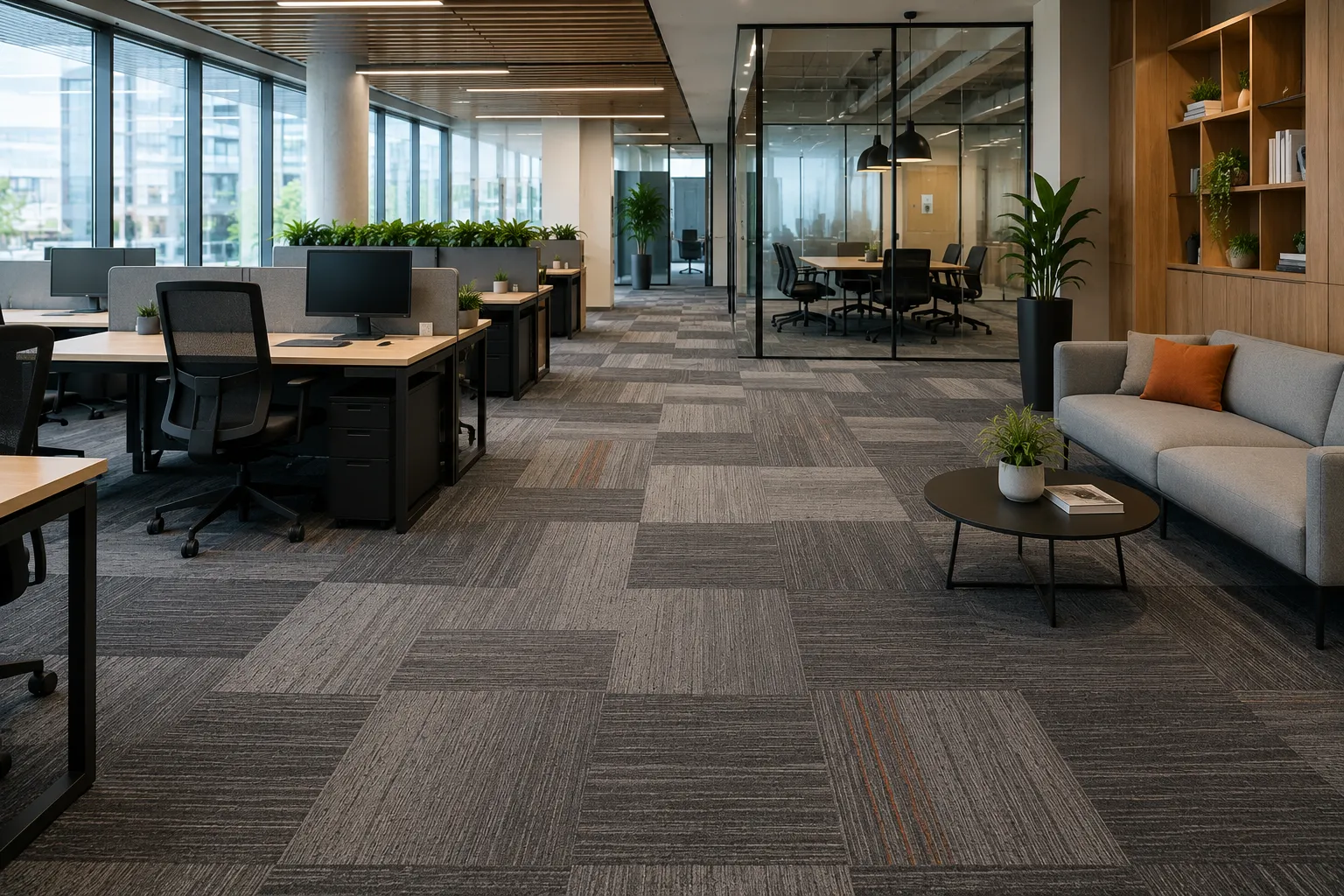
Vinyl is available in designs that can resemble timber, stone, concrete, and other surfaces. It also comes in solid colors, patterns, and abstract finishes. This gives designers room to create a particular appearance without necessarily using the natural material being represented.
Luxury vinyl tile, often called LVT, is particularly useful when individual planks or tiles are part of the design concept. Sheet vinyl, meanwhile, can create a more continuous visual surface and may be preferred in spaces where fewer seams are desirable.
Flooring influences how a commercial room feels as well as how it looks. Compared with some rigid flooring materials, resilient vinyl can feel less hard underfoot, although the exact level of comfort depends on the product construction and subfloor.
Acoustic performance can also be relevant in offices, education settings, hospitality spaces, and multi-use buildings. Certain vinyl flooring systems include acoustic backing or are designed to help manage impact sound. When noise control is an important project requirement, buyers should check the acoustic properties of the specific flooring system rather than relying on the material category alone.
Commercial spaces often contain areas where occasional spills or moisture are expected. Vinyl itself is generally resistant to water, which can make it practical for suitable kitchens, entrance areas, healthcare settings, retail environments, and other frequently cleaned spaces.
However, water resistance does not mean every vinyl installation is automatically waterproof. Seams, edges, adhesives, subfloor conditions, and installation quality can all affect the finished floor.
For areas with significant or persistent moisture, the complete flooring system should be evaluated rather than focusing only on the surface material.
Vinyl flooring offers several installation formats, which can be useful for both new construction and refurbishment projects.
Sheet vinyl can cover larger areas with relatively few seams. Vinyl tiles and planks provide a modular approach, making it possible to create patterns or replace individual damaged sections in some installations. Glue-down systems are common in commercial environments, while other installation methods may be appropriate depending on the product and space.
Subfloor preparation is particularly important. Uneven surfaces, moisture problems, cracks, or debris beneath the flooring can affect the final appearance and performance. A properly prepared base helps the vinyl sit evenly and reduces the chance of visible imperfections.
Vinyl has useful characteristics, but product selection should be based on the actual conditions of the space. Consider expected traffic, cleaning routines, moisture exposure, furniture and equipment, acoustic needs, slip resistance, and the condition of the existing subfloor.
It is also worth thinking about future maintenance. Modular vinyl flooring may make localized replacement easier, while sheet products can be useful where a more continuous surface is preferred. The better choice depends on the priorities of the individual project.
Environmental and indoor-air considerations may also be part of a flooring specification. Buyers should review the relevant product documentation when emissions, material composition, recycling, or sustainability requirements are important to the project.
Vinyl flooring works well in many commercial spaces because it addresses several everyday requirements within one flooring category. It can cope with busy interiors, support straightforward cleaning routines, offer varied design choices, and work in areas where occasional moisture is expected.
Its performance, however, depends on choosing the right commercial-grade product and installing it over a properly prepared surface. By considering traffic, maintenance, acoustics, moisture, safety, and design together, facility managers and designers can determine whether vinyl flooring is a practical match for a particular commercial environment.
We are committed to delivering high-quality painting and flooring services that enhance the beauty, comfort, and value of your space. With a focus on craftsmanship, reliability, and customer satisfaction, we handle every project with care from start to finish.