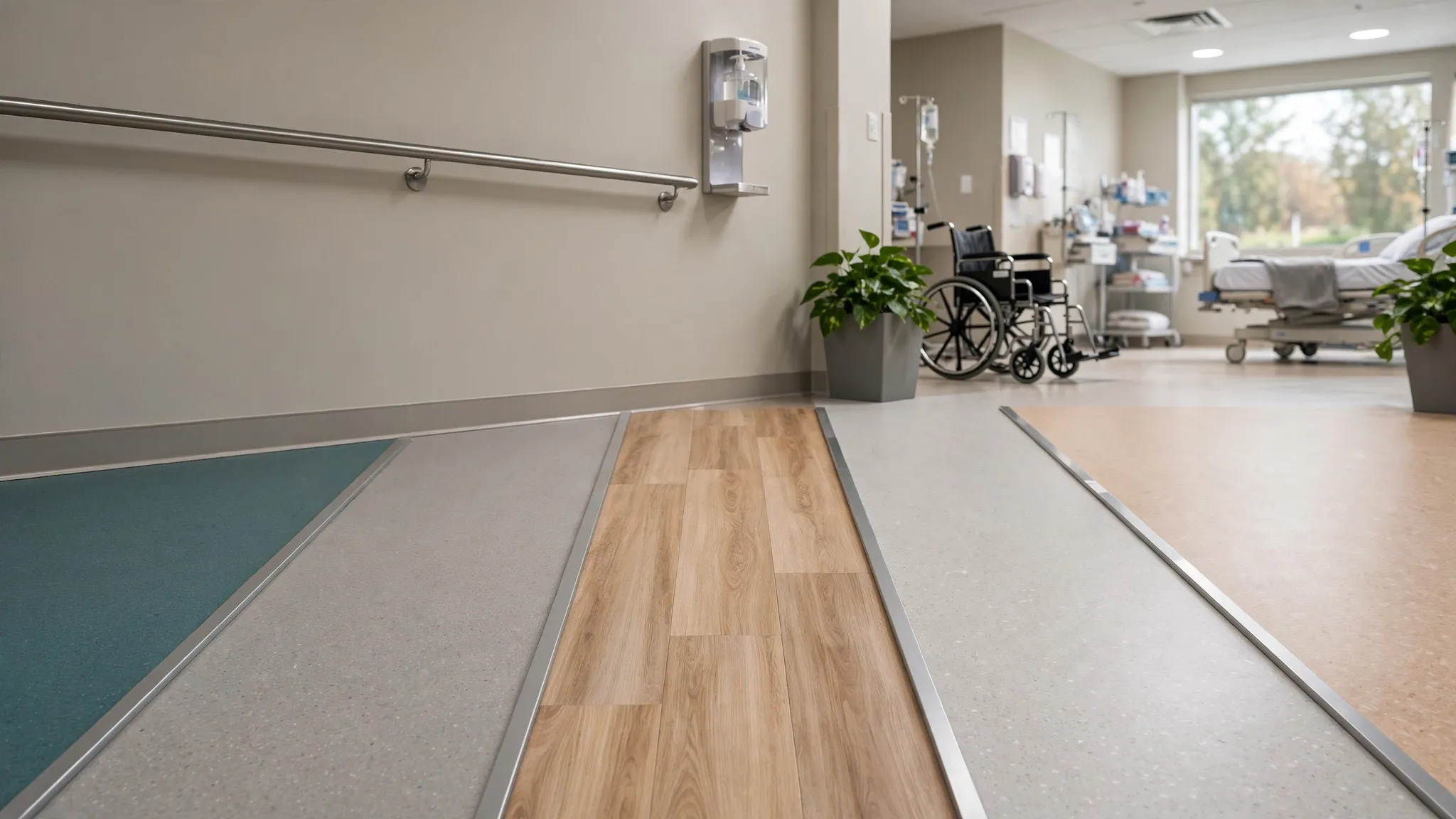
Healthcare environments demand flooring that supports hygiene, safety, durability, and patient comfort. Choosing the right Flooring reduces maintenance costs, improves infection control, and creates safer spaces for patients and staff.
Hospitals, clinics, laboratories, and medical offices experience constant foot traffic, equipment movement, and frequent cleaning. Every flooring material must perform under these demanding conditions. Industry standards also require surfaces that help prevent slips and support effective sanitation.
We will examine the best flooring solutions, compare their strengths, and explain where each option performs best. This guide helps facility managers, architects, and healthcare providers make informed decisions based on performance, maintenance, and long-term value.
Healthcare buildings place unique demands on Flooring. Every surface must resist bacteria, withstand rolling equipment, and remain easy to clean. Medical environments also require flooring that supports infection prevention while reducing accident risks.
According to the U.S. Centers for Disease Control and Prevention, environmental cleanliness plays an important role in limiting healthcare-associated infections. Selecting suitable flooring contributes to safer patient care and smoother daily operations.
Proper installation also eliminates weak joints where moisture and contaminants could collect over time.
Every healthcare flooring material should provide the following benefits:
Easy cleaning and disinfection.
High slip resistance.
Resistance to chemicals and stains.
Long service life.
Comfortable walking surfaces.
Low maintenance requirements.
Noise reduction for patient comfort.
Different healthcare spaces require different materials. Emergency rooms, operating theaters, waiting areas, and laboratories all have unique performance needs.
| Flooring Type | Best Application | Key Benefits | Maintenance |
|---|---|---|---|
| Sheet Vinyl | Hospitals, patient rooms | Seamless, hygienic, water-resistant | Low |
| Rubber Flooring | Corridors, rehabilitation | Comfortable, slip-resistant, quiet | Low |
| Epoxy Flooring | Laboratories, surgical areas | Seamless, chemical-resistant | Moderate |
| Luxury Vinyl Tile (LVT) | Clinics, offices | Attractive, durable, and easy to replace | Low |
| Linoleum | Medical offices | Sustainable, antimicrobial properties | Moderate |
Sheet vinyl remains one of the most trusted Flooring solutions in healthcare. Its seamless installation limits dirt accumulation and moisture penetration. Heat-welded seams create continuous surfaces that simplify cleaning and disinfection. Hospitals frequently select sheet vinyl because it balances durability with affordability.
Modern products also include wear layers that resist scratches from hospital beds, wheelchairs, and medical carts. Manufacturers continue improving designs, allowing healthcare facilities to achieve both performance and attractive interiors without compromising hygiene standards.
Sheet vinyl delivers several important operational benefits.
A seamless surface minimizes bacterial growth.
Excellent moisture resistance.
Comfortable underfoot.
Available in many colors and finishes.
Lower lifecycle maintenance costs.
Rubber flooring performs exceptionally well in busy corridors, rehabilitation centers, and nursing stations. It absorbs impact, reduces walking fatigue, and lowers noise levels throughout healthcare buildings. Staff members who spend long shifts standing often benefit from its cushioning properties.
Rubber also provides excellent slip resistance, making it suitable for areas exposed to frequent cleaning. Many healthcare designers choose rubber because it supports patient comfort while maintaining long-term durability under continuous traffic.
Epoxy flooring serves specialized medical environments requiring exceptional chemical resistance. Laboratories, pharmaceutical facilities, and operating suites frequently use epoxy because it forms a seamless protective layer. Properly installed epoxy resists harsh disinfectants, heavy equipment, and moisture exposure.
Although installation requires careful preparation, its durability often offsets the higher initial investment. Healthcare engineers frequently specify epoxy where sanitation standards remain especially strict.
Not every area requires the same flooring system. Matching materials to functional needs improves safety, maintenance efficiency, and long-term performance. Experienced facility planners evaluate traffic levels, cleaning frequency, equipment loads, and patient comfort before selecting materials.
This practical approach reduces repair costs while supporting daily healthcare operations. A carefully planned flooring strategy also simplifies future renovations because materials remain suitable for changing clinical requirements.
Operating rooms: Seamless sheet vinyl or epoxy.
Patient rooms: Sheet vinyl or rubber flooring.
Hallways: Rubber flooring for comfort and noise reduction.
Laboratories: Epoxy flooring for chemical resistance.
Reception areas: Luxury vinyl tile for appearance and durability.
Healthcare organizations should evaluate total ownership costs rather than installation price alone. High-quality Flooring often lasts decades with proper maintenance. Durable materials reduce replacement frequency, minimize service interruptions, and lower repair expenses.
Preventive maintenance programs also preserve appearance while extending product life. Daily cleaning with manufacturer-approved products prevents premature wear and supports infection control. Investing in premium flooring frequently produces measurable savings through reduced maintenance labor and longer replacement cycles.
Select products certified for healthcare environments.
Choose seamless systems whenever possible.
Verify slip resistance ratings.
Consider acoustic performance.
Plan maintenance before installation begins.
Work with experienced healthcare flooring installers. Explore our latest insights in Why Carpet Tiles Are Becoming the Preferred Choice for Modern Offices?
The best Flooring for healthcare facilities combines hygiene, durability, safety, and long-term value. Sheet vinyl, rubber, epoxy, and luxury vinyl each serve different medical environments effectively. Matching flooring materials to each healthcare space improves patient safety, supports infection control, and reduces maintenance costs throughout the building’s lifespan.
We are committed to delivering high-quality painting and flooring services that enhance the beauty, comfort, and value of your space. With a focus on craftsmanship, reliability, and customer satisfaction, we handle every project with care from start to finish.